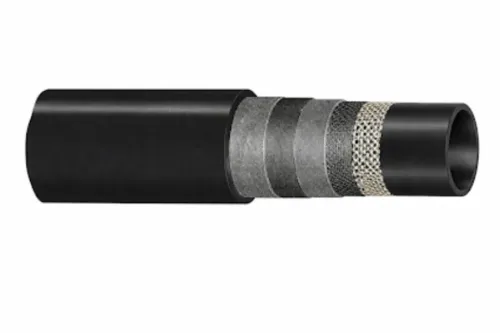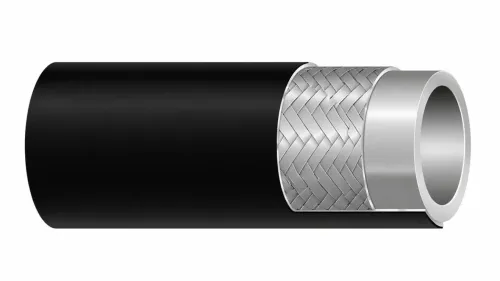
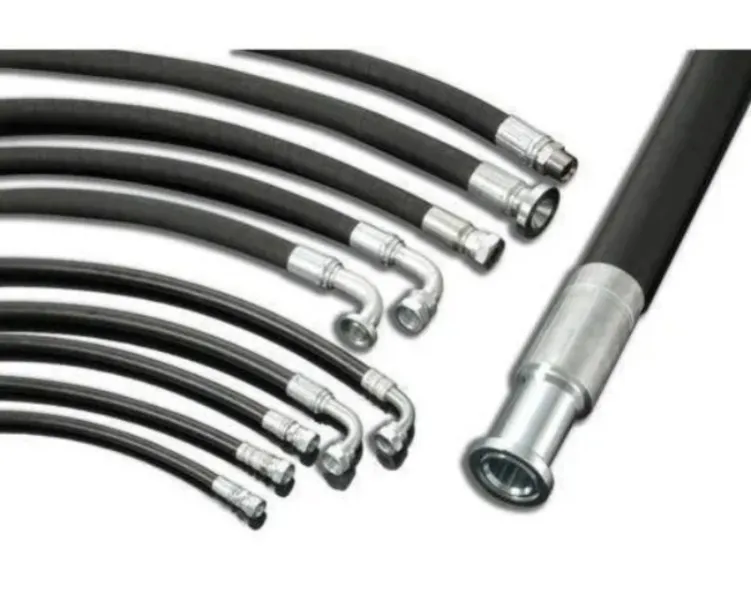
Excavators, loaders, mining machinery, construction equipment, and other heavy mobile machines operate in conditions that can be far harsher than those inside a controlled factory. An Earth Moving Hose used in these environments may face vibration, movement, dirt, abrasive surfaces, weather, and demanding hydraulic duties.
For equipment owners and maintenance teams in Nagpur and across Maharashtra, understanding these conditions is important when planning hose replacement and preventive maintenance.
Mobile Equipment Creates Constant Movement
Stationary industrial piping can often be securely supported. A flexible hose on earth-moving machinery behaves differently.
Booms, arms, attachments, steering systems, and other moving components repeatedly change position. Hoses need to accommodate this motion without being excessively stretched, twisted, pinched, or bent.
Correct routing is therefore part of hose performance.
Even a technically suitable hose can experience premature deterioration if its installation repeatedly forces it against surrounding components.
Abrasion Deserves Attention
Construction and mining environments commonly expose hoses to dust, debris, metal edges, and equipment surfaces.
Repeated rubbing can gradually wear through the outer cover. Once abrasion becomes severe, the reinforcement underneath may become vulnerable.
During routine equipment inspection, technicians should look not only for leaks but also for areas where the hose contacts brackets, frames, guards, and neighbouring components.
Pressure Requirements Must Be Verified
Many mobile equipment hoses operate in hydraulic systems, making pressure compatibility essential.
Selection should consider the equipment manufacturer's requirements and relevant hose specifications. The hose, fittings, and complete assembly need to be appropriate for the application.
Replacing a failed Earth Moving Hose with a product that merely has similar external dimensions is not an adequate selection method.
Contamination Control Matters During Replacement
Hydraulic systems depend on clean fluid.
When a hose is removed, open connections should be protected from dirt and debris. Replacement work performed in dusty outdoor conditions needs particular care.
Contamination introduced during maintenance can affect valves, pumps, and other precision hydraulic components.
Preventive Inspection Reduces Surprises
Heavy equipment operators and maintenance teams can incorporate hose checks into routine inspections.
Look for:
- Abrasion
- Cracking
- Exposed reinforcement
- Leakage
- Damaged fittings
- Twisting
- Flattening
- Unusual bends
- Contact with hot components
- Movement that pulls on connections
A machine's hose routing can also be observed while equipment moves through its normal operating range, using appropriate safety procedures.
For mining, construction, engineering, and equipment maintenance businesses around Nagpur, unplanned machinery downtime can disrupt schedules and increase maintenance pressure. Keeping accurate hose specifications and replacement records can make future procurement faster.
Kanta Enterprises supplies industrial hose and rubber product requirements to businesses that need products selected around real operating conditions. When requesting a replacement, providing equipment details, hose markings, dimensions, fitting information, pressure requirements, and photographs where appropriate can improve identification.
FAQs
What is an Earth Moving Hose used for
It is generally associated with demanding hose applications on construction, mining, and heavy mobile equipment, including hydraulic and related fluid-transfer duties depending on the hose specification.
Why do hoses on excavators wear quickly
Common causes include abrasion, incorrect routing, excessive bending, twisting, heat exposure, pressure conditions, and contact with surrounding components.
Can a damaged hydraulic hose be ignored if it is not leaking
Visible damage should be assessed promptly. Abrasion, exposed reinforcement, deformation, and damaged fittings can indicate deterioration even before significant leakage appears.
What details help identify a replacement hose
Equipment information, existing hose markings, size, length, fitting type, pressure requirements, application, and operating conditions are useful starting points.
Keywords